
国家高新技术企业

让燃料电池测试更智能
近日,武汉理工大学唐浩林教授团队在材料领域顶级期刊《Advanced Functional Materials》上发表了一项重要突破。
该研究通过跨尺度协同策略,成功结合轻原子给电子效应与大孔框架界面重构,开发出低铱 PEM 电解水阳极催化剂,旨在缓解 PEM 电解水对贵金属铱的高度依赖。
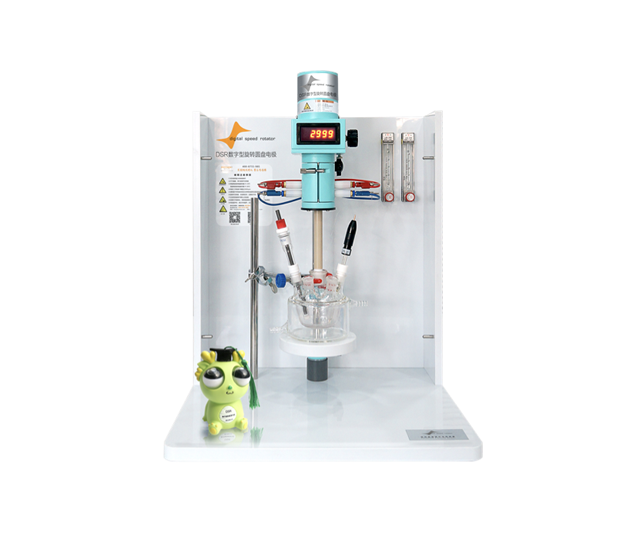
该研究利用DC DSR数字型旋转圆盘圆环电极装置对催化剂的本征电化学性能进行了验证,相关成果为高性能低铱电解水器件催化剂的设计提供了新的思路。
第一作者:张好
论文单位:武汉理工大学材料符合复合新技术国家重点实验室唐浩林团队、佛山仙湖实验室、南京工业大学等
论文DOI: 10.1002/adfm.77821(点击文末「阅读原文」,直达链接)
ABSTRACT
Low‐iridium proton exchange membrane (PEM) water electrolysis at high current densities faces two critical bottlenecks, namely impaired electron transport within the catalyst layer due to sparse active sites, and severe bubble‐induced mass transport resistance. Here we break this deadlock via a cross‐scale synergy strategy combining a light‐atom electron‐donating effect with macroporous framework interface reconstruction. Introducing trace nitrogen into a three‐dimensional macroporous TiO2 lattice significantly narrows the band gap, enhances conductivity, lowers oxygen vacancy formation energy, and strengthens interfacial charge transfer to IrOx, thereby overcoming the electronic isolation issue (i.e., the “island effect”). Meanwhile, the macroporous framework together with nitrogen‐enhanced hydrophilicity reconstructs the gas‐liquid interface, enabling rapid vertical bubble detachment as confirmed by volume of fluid (VOF) simulations. IrOx/N‐TiOx catalyst achieves a mass activity of 472.57 A g−1, about 31 times that of commercial IrO2. Benefiting from excellent mass transfer and catalytic activity, a single cell with an ultralow Ir loading of only 0.19 mg cm−2 requires just 2.086 V at 8 A cm−2 and operates stably for over 230 h at 1 A cm−2. This cross‐scale synergy offers a powerful route to low‐iridium, high‐current‐density PEMWE.
该工作建立轻原子电子给体效应+大孔界面重构跨尺度协同策略,同时解决低铱 PEM 电解水 “电子孤岛” 与 “高电流气泡传质” 两大痛点。在极低铱负载下实现超高电流密度运行,为 PEMWE 阳极低铱化提供了全新材料设计思路,推动绿氢电解槽产业化发展。
具体实验方法请阅读原文,或搜索【理化有限公司】公众号